
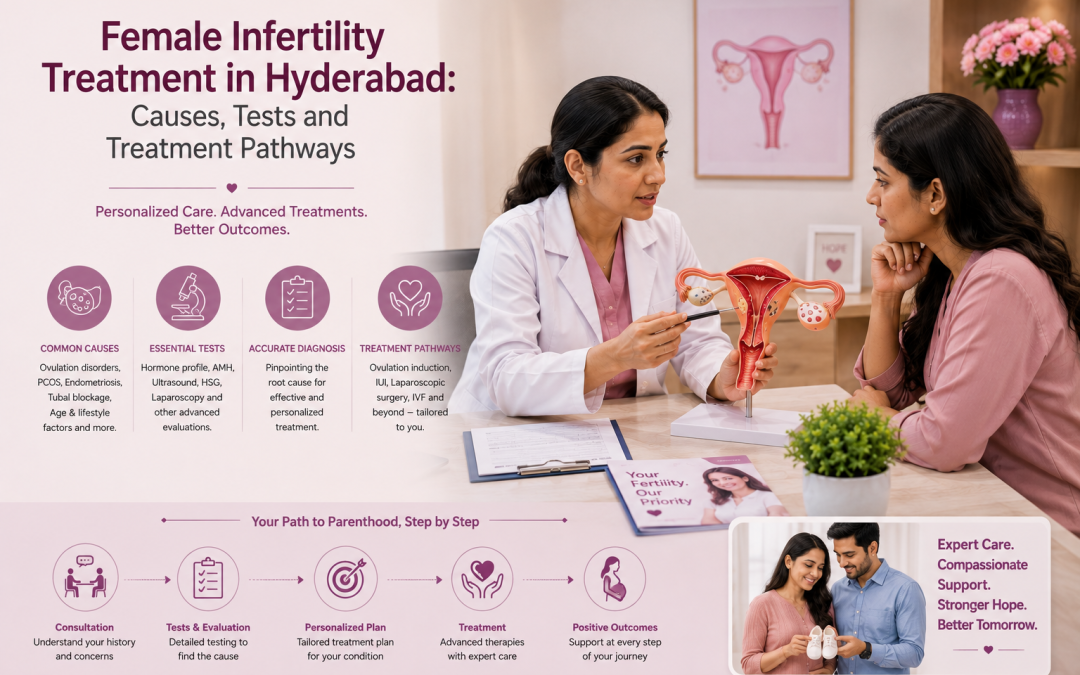
People searching for the best female infertility treatment in Hyderabad may encounter lists of procedures, but treatment makes sense only after identifying the likely cause. Female infertility can involve ovulation, the fallopian tubes, the uterus, endometriosis, ovarian reserve, age-related changes or a combination of factors. WHO notes that infertility can result from ovarian, uterine, tubal and endocrine causes, among others.
Ovulation disorders
Irregular or absent ovulation can reduce the opportunity for conception. PCOS is one common cause, but thyroid or prolactin disorders and other endocrine conditions may also matter. Treatment depends on the diagnosis rather than on the symptom alone.
Tubal factors
Blocked or damaged fallopian tubes can prevent sperm and egg from meeting. The next step depends on the location and severity of the problem, previous infections or surgery, and whether repair or IVF is more appropriate.
Endometriosis and pelvic factors
Endometriosis can affect fertility through inflammation, anatomy and ovarian factors. Treatment decisions depend on symptoms, age, ovarian reserve, previous surgery and fertility goals.
Uterine factors
Fibroids, polyps, adhesions or congenital uterine differences may be relevant in selected patients. Not every finding requires surgery, so the key question is whether the abnormality is likely to affect fertility or pregnancy.
Ovarian reserve and age
AMH and antral follicle count help estimate ovarian response in assisted conception. They should not be treated as simple yes/no tests for natural fertility. NICE’s 2026 guidance specifically cautions against using AMH to predict spontaneous conception.
Treatment pathways
Options can include ovulation induction, IUI, surgery in selected cases, IVF or ICSI. The most appropriate path depends on the cause, age, duration of infertility and male-partner factors.
Why couple-level evaluation matters
Even when a woman has a known diagnosis, semen and other couple-level factors may change the plan. To review MotherToBe’s approach to female infertility treatment, see the dedicated service page.
Bring the whole reproductive history
Include cycle pattern, previous pregnancies, pelvic infections, surgeries, endometriosis symptoms, medications and family history. If you have had fertility treatment, bring response and embryology data. Female infertility evaluation is strongest when it is integrated with partner testing rather than done in isolation.
Treatment should address the limiting factor
If the main problem is ovulation, treatment may focus on ovulation. If both tubes are blocked, repeated ovulation treatment may not solve the problem. If age and ovarian reserve are major constraints, time may become more important. The diagnosis should therefore lead logically to the proposed treatment.
Specialist Female Fertility Care at MotherToBe
At MotherToBe Fertility Clinic & Academy, Madhapur, Hyderabad, fertility care is led by Dr. S. Vyjayanthi, MD, DGO, DNB, MRCOG, MSc (Embryology, UK), CCT (UK), a Subspecialist in Reproductive Medicine & Surgery (RCOG, UK). She serves as Director & Consultant Fertility Specialist at MotherToBe.
Her professional leadership roles include President, Telangana Chapter RCOG; Managing Committee Member, The PCOS Society of India; and Managing Committee Member, Fertility Preservation Society of India.
For female infertility, her reproductive-medicine background is relevant to evaluation of ovulation, ovarian reserve, tubal or uterine factors and the decision between simpler treatment, surgery and assisted reproduction.
Read more about Dr. S. Vyjayanthi’s qualifications, leadership roles and Director’s Message on the MotherToBe website.
Frequently Asked Questions
What is the most common cause of female infertility?
Ovulation disorders are common, but the relative importance of causes varies and more than one factor can be present.
Does low AMH mean natural pregnancy is impossible?
No. AMH is mainly useful for estimating ovarian response in assisted conception; it should not be used alone to predict spontaneous conception.
Can blocked tubes be treated without IVF?
Sometimes surgery may be considered, but the choice depends on the type of tubal problem and the overall fertility situation.
When should I seek evaluation?
Timing depends on age, duration of trying and known reproductive conditions. Earlier evaluation can be appropriate when there are specific concerns.
Key takeaways
- Choose treatment or a specialist based on diagnosis, evidence, transparency and individual needs—not on unverified ‘best’ or ‘top’ claims.
- Use the target keyword naturally in the title, introduction and relevant context. Do not repeat it mechanically throughout the article.
- Link this article to the relevant MotherToBe service page and link back from related educational content where it genuinely helps the reader.
- Have the medical content reviewed before publication and update it when important clinical guidance changes.
Suggested internal links
Primary service link: female infertility treatment
Doctor profile link: Dr. S. Vyjayanthi – Director’s Message
Also add 2–4 natural internal links to closely related MotherToBe guides where relevant. Vary anchor text and avoid sitewide exact-match repetition.
Medical review and publishing note
Educational content only. Before publication, a qualified fertility specialist should verify the medical statements, local legal/regulatory details, clinic-specific services, doctor credentials and any costs or outcome data. Add the reviewer name, credentials and review date only after a real review. Proposed medical reviewer: Dr. S. Vyjayanthi; publish only after her review and approval of the clinical wording.
References for medical review
- WHO: Infertility fact sheet (2025)
- NICE NG257 Fertility Problems: Assessment and Treatment (2026)