
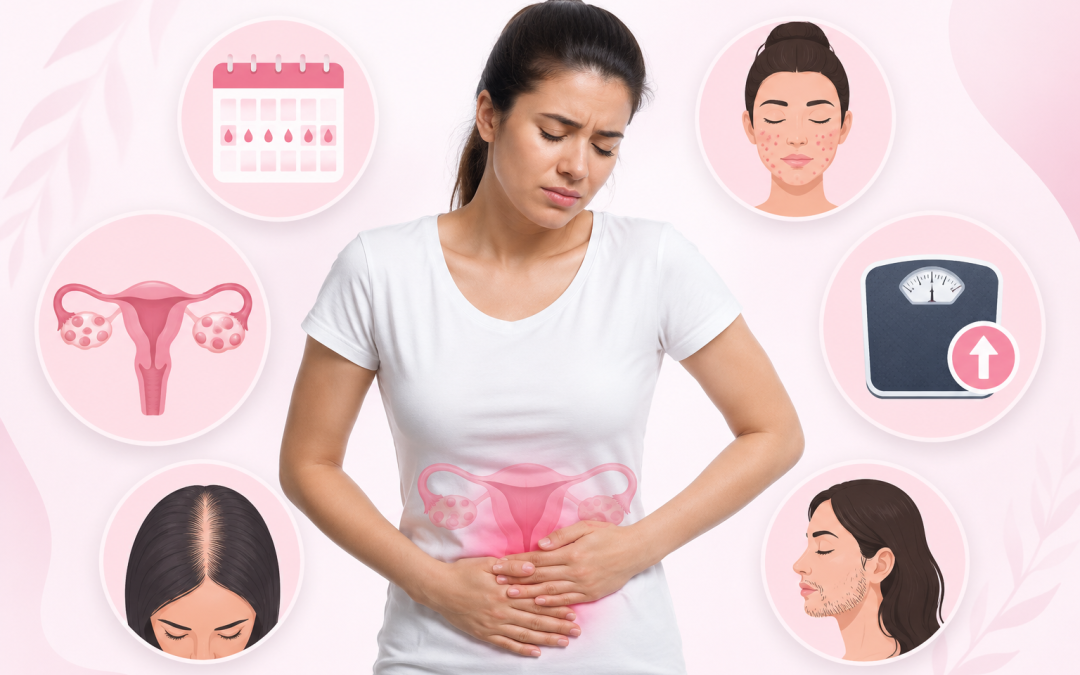
If you’ve been searching “how to know if you have PCOS/PMOS,” you’re not alone. PCOS/PMOS, or Polycystic Ovary Syndrome, affects close to 1 in 10 women of reproductive age — yet it remains one of the most under-diagnosed hormonal conditions, mainly because its symptoms are easy to dismiss individually. Irregular periods get blamed on stress. Acne gets blamed on diet. Weight gain gets blamed on lifestyle. It’s only when several of these signs show up together that PCOS/PMOS becomes the real explanation.
This checklist is designed to help you recognise the pattern — not to replace a diagnosis, but to help you walk into a doctor’s office with clarity instead of confusion.
What Exactly Is PCOS/PMOS?
PCOS is a hormonal disorder in which the ovaries produce higher-than-normal levels of androgens (male hormones). This hormonal imbalance disrupts ovulation — the monthly release of an egg — which is why PCOS is one of the leading causes of irregular periods and difficulty conceiving. The name comes from the small, fluid-filled sacs (follicles) that often develop on the ovaries, though not every woman with PCOS actually has visible cysts.
Because PCOS affects hormones, metabolism, skin, and fertility all at once, its symptoms show up in very different parts of daily life. That’s exactly why a checklist approach works better than looking for one single “tell-tale sign.”
The PCOS/PMOS Symptom Checklist
Go through each category honestly. You don’t need every symptom to have PCOS/PMOS — but if you’re checking boxes across multiple categories, it’s worth a proper evaluation.
1. Menstrual Cycle Signs
- Periods that come less than 8 times a year
- Cycles longer than 35 days, or unpredictable timing
- Periods that stop altogether for months at a time
- Very heavy or very light bleeding when your period does arrive
2. Hormonal & Skin Signs
- Excess hair growth on the face, chin, chest, or back (hirsutism)
- Persistent acne, especially along the jawline, that doesn’t respond to regular treatment
- Thinning hair or male-pattern hair loss on the scalp
- Darkening or thickening of skin around the neck, armpits, or groin (acanthosis nigricans)
- Skin tags in body folds
3. Metabolic Signs
- Difficulty losing weight despite diet and exercise
- Weight gain concentrated around the abdomen
- Frequent sugar cravings or energy crashes (a possible sign of insulin resistance)
- Family history of type 2 diabetes
4. Fertility Signs
- Irregular periods suggesting ovulation is not happening
- Trying to conceive for 6–12 months without success
- History of early miscarriage
5. Emotional & Wellbeing Signs
- Mood swings, anxiety, or low mood that seem tied to your cycle
- Fatigue that doesn’t improve with rest
- Sleep disturbances, including symptoms of sleep apnoea
How Many Symptoms Mean You Should See a Doctor?
Doctors typically look for at least two of the following three features to consider a PCOS diagnosis:
- Irregular or absent ovulation (shown through irregular periods)
- Clinical or blood-test evidence of high androgen levels (acne, excess hair growth, or elevated hormone levels)
- Polycystic ovaries visible on an ultrasound scan
This means you do not need to have cysts on your ovaries to be diagnosed with PCOS/PMOS — a common misconception. Many women with textbook PCOS/PMOS have completely normal-looking ovaries on a scan, and are diagnosed instead through their cycle pattern and hormone levels.
If you recognise two or more items from the menstrual and hormonal categories above, that alone is often enough reason to get evaluated — you don’t need to wait until fertility becomes a concern.
What Tests Will a Fertility Specialist Actually Run?
A proper PCOS/PMOS work-up usually includes:
- Detailed menstrual and symptom history — often the single most useful diagnostic tool
- Blood tests to check androgen levels, LH/FSH ratio, thyroid function, and insulin resistance markers
- Pelvic ultrasound to assess ovarian appearance and follicle count
- Screening for related risks, since PCOS/PMOS is also linked to a higher long-term risk of type 2 diabetes and cardiovascular disease
Why Early Recognition Matters
PCOS/PMOS is a progressive condition — left unmanaged, it doesn’t just affect your ability to conceive later; it also increases long-term risk for diabetes, high cholesterol, and endometrial changes from prolonged irregular cycles. The earlier it’s identified, the more treatment options are available, and the gentler those options usually are — often starting with lifestyle changes and medication, long before fertility treatment becomes necessary.
How MotherToBe Approaches PCOS/PMOS Diagnosis and Care
At MotherToBe Fertility Centre, Hyderabad, PCOS is managed through a dedicated PCOS /PMOS Clinic led by Dr. S. Vyjayanthi — a fertility specialist who trained directly under Prof. Adam Balen, a globally recognised authority on PCOS/PMOS/PMOS, during her Clinical Fellowship in Reproductive Medicine at Leeds, UK. With over 20 years of experience and more than 19,500 couples treated, Dr. Vyjayanthi’s approach to PCOS/PMOS starts with a full diagnostic picture — not just a scan — followed by a treatment plan tailored to your specific pattern of symptoms, whether that means lifestyle guidance, ovulation induction, or, when needed, IVF.
For women with PCOS/PMOS who do require IVF, the outlook is genuinely encouraging: at MotherToBe, PCOS/PMOS patients undergoing IVF see success rates of 60–65% per cycle under age 35, and 45–50% between ages 35–40 — often higher than average, because PCOS is typically associated with a strong ovarian reserve once ovulation is properly managed.
Frequently Asked Questions
Ques: Can I have PCOS even if my periods are somewhat regular?
Yes. While irregular periods are the most common sign, some women with PCOS/PMOS ovulate irregularly rather than not at all, and can have cycles that seem close to normal. Hormonal and skin symptoms are still worth paying attention to even if your cycle seems fine.
Ques: Is PCOS/PMOS the same as having ovarian cysts?
No. “Polycystic” refers to a pattern of multiple small follicles, not the larger, isolated cysts that cause pain. Many women with PCOS/PMOS have no cysts at all on ultrasound, and diagnosis relies more on hormone and cycle patterns.
Ques: Can PCOS symptoms appear later in life, even if I didn’t have them as a teenager?
Yes. While many symptoms begin around puberty, weight changes, stress, and age can bring on or worsen PCOS/PMOS symptoms at any point during reproductive years.
Conclusion
PCOS/PMOS rarely announces itself with one obvious symptom — it shows up as a pattern across your cycle, skin, weight, and energy levels. If this checklist felt a little too familiar, that’s worth acting on. A proper diagnosis takes one visit, a few tests, and gives you a clear starting point — whether that’s simple lifestyle changes or a structured treatment plan.
Call to Action: If two or more of these signs sound like you, book a consultation with Dr. S. Vyjayanthi at MotherToBe Fertility Centre’s dedicated PCOS/PMOS Clinic in Madhapur, Hyderabad. Call 7093617272 / 7093607272, or ask about the free Thursday consultation slots.